
Auto Parts and Electrical Components in El Salvador
The sector in figures
| Indicator | Figure | Period |
|---|---|---|
| Auto parts exports | USD 163.8 million | 2025 |
| Share of auto parts exports to North America | More than 95% | 2025 |
| Electrical and electronic component exports | USD 441.7 million, up 18% | 2025 |
| Insulated wires and cables | USD 115.06 million, up 13.1% | First half of 2026 |
| Fixed electrical capacitors | USD 184.1 million, up 39.8% | January to September 2026 |
| High-technology exports | USD 386 million | 2025 |
| Free zones | 17 zones, 291 companies, about 70,000 jobs | 2026 |
Source: INVEST: auto parts sector; INVEST: electrical components sector; Diario El Mundo: the 10 products that make up 42% of El Salvador exports, 8 August 2026; El Diario de Hoy: Salvadoran exports grow 3.7% to September and pass USD 5,000 million, 26 October 2026; Diario El Mundo: El Salvador competes globally but needs more technology investment, says Fusades, 5 June 2026; U.S. Department of State: 2026 Investment Climate Statements, El Salvador1,2,4,5,6,8
What is made here
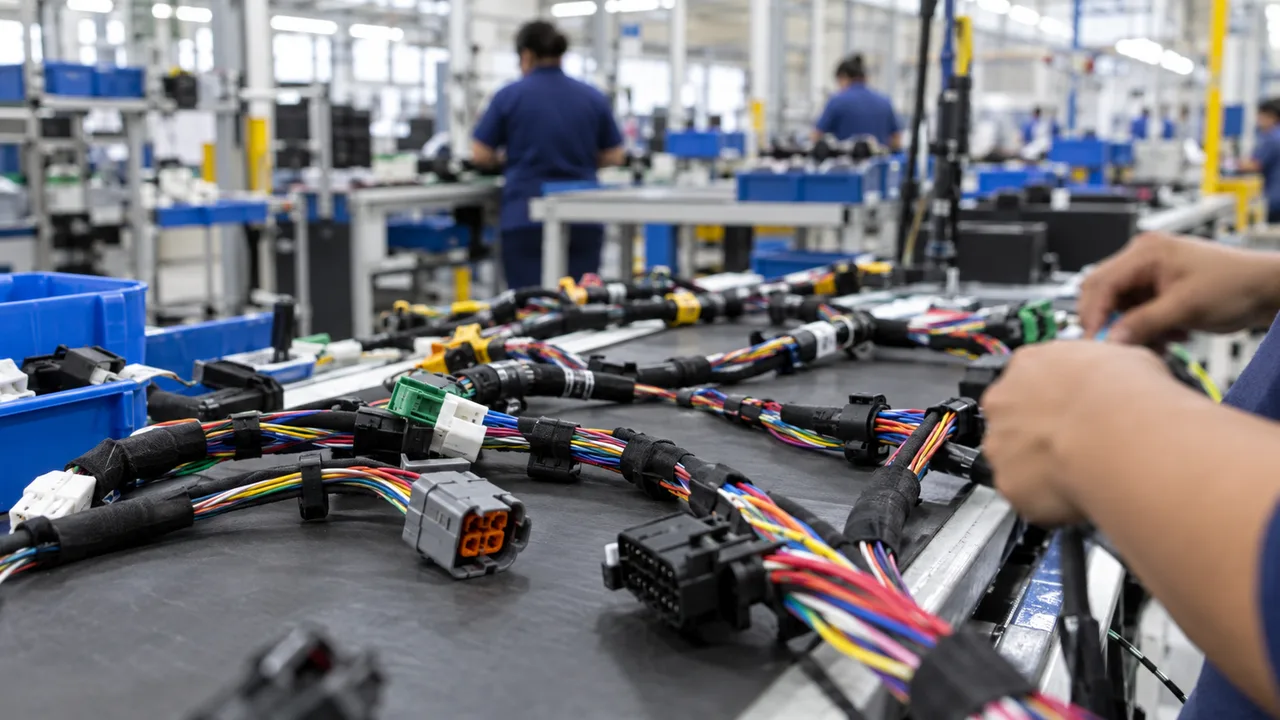
Two product groups dominate. Ignition cable sets for spark plugs make up almost all auto parts exports, and capacitors, mainly tantalum and ceramic types, lead electronic components. INVEST, citing TradeMap data, ranks El Salvador as the sixth exporter of tantalum capacitors in the world and the first in Latin America. Other cable sets and semiconductor parts complete the top five electronic component exports of 2025.1,2,3
Source: INVEST: Manufacturing Industry Guide 20263
Growth has continued in 2026. In the first half, insulated wires and cables were the sixth export product of the country and fixed capacitors the seventh, with USD 113.44 million and growth of 39.4%. Capacitors helped offset a 14.2% fall in textile and apparel exports within the maquila regime, whose other products grew 39.5%.4,7
The base is wider than these two groups. INVEST counts USD 955 million of metalworking exports and USD 549 million of plastics and rubber exports in 2025, out of USD 4,022 million of manufactures. Plastic packaging alone reached USD 315.3 million, and welded tubes and steel bars lead metalworking, which gives suppliers for moulded and stamped parts.3
Main plants
| Company | Location | Products | Facts |
|---|---|---|---|
| Yazaki (Arnecom de El Salvador) | Santa Ana | Automotive wiring harnesses | Since 2006; more than 2,500 direct jobs, about 72% women; 300 to 400 harnesses a day |
| Kyocera AVX | San Bartolo Free Zone, Ilopango | Tantalum, niobium and multilayer ceramic capacitors | More than 30 years in the country; grew from 900 to more than 3,600 employees |
Source: INVEST: Manufacturing Industry Guide 2026; Kyocera AVX: ISO 9001 certificate, El Salvador site3,9
Yazaki, a Japanese maker of automotive wiring systems, has built harnesses in El Salvador for Subaru, Jeep chassis and Chrysler doors, and made its first export to the United States nine months after construction began. Kyocera AVX moved production lines from Mexico, England and the Czech Republic and widened its work from assembly to chemical processes, moulding, testing and packaging, according to INVEST, which reports that new production lines took 10 months to set up and that production efficiency is over 97%. Its Ilopango plant holds ISO 9001 certification for the manufacture and assembly of tantalum, niobium and multilayer ceramic capacitors.3,9
The think tank Fusades cites AVX as an example of how foreign investment in technology lifts exports. Salvadoran high-technology exports rose from USD 38 million in 1994 to USD 386 million in 2025, and electrical and electronic products within them grew about 14% a year to USD 209 million.6
What INVEST is promoting
| Line | Examples |
|---|---|
| Electrical and electronic parts for vehicles | Sensors, control modules, connectors, wiring harnesses |
| Plastic components | Door panels, bumpers, dashboard parts, housings, cable insulation |
| Textile parts for vehicle interiors | Airbag components, seat belts, upholstery, linings |
| Metal parts | Stamped parts, chassis supports, suspension parts |
| Electronic and electrical components | Capacitors, resistors, inductors, cables, control panels, switches |
Source: INVEST: auto parts sector; INVEST: electrical components sector1,2
INVEST names the United States and Mexico as the target markets for metal parts, and sees moulded auto parts as the next step for the plastics industry and vehicle interiors as a route for the textile industry.1
Workforce, markets and limits
INVEST describes a labour force of about 3 million people, 54% of them under 40, and staff turnover below 10% in manufacturing. Yazaki reports an annual turnover of 0.48% at its Santa Ana plant. By law, 90% of plant and clerical staff must be Salvadoran, and the U.S. State Department notes that some employers bring in managers from abroad because of local skills gaps.3,8
The United States is the main market for Salvadoran goods, with USD 1,662.3 million of purchases from January to September 2026, up 3.1%. Sales to Mexico, a large car-making country, rose 14.9%. Countries with trade agreements took 94% of exports, which matters for rules of origin on harnesses and electronic parts. An Agreement on Reciprocal Trade between the United States and El Salvador, signed in January 2026, is meant to lower trade barriers further, according to the State Department.5,8
Fusades says that attracting more technology firms will require stronger technical and university education linked to industry needs, better energy and digital infrastructure, wider connectivity and a stable, predictable business climate.6
Incentives
Most exporters in the sector operate under the Free Zones Law, which exempts imports of machinery, raw materials and fuels used in production and grants income tax and municipal tax exemptions that depend on location. A free zone user needs at least USD 500,000 of fixed assets within two years or 50 permanent jobs from the first year. An inward processing warehouse (DPA) needs USD 800,000 or 75 jobs.3
| Income tax exemption | Free zone, San Salvador area | Free zone, rest of the country |
|---|---|---|
| 100% | 15 years | 20 years |
| 60% | Next 10 years | Next 15 years |
| 40% | Next 10 years | Next 10 years |
Source: INVEST: Manufacturing Industry Guide 20263
The Law for the Promotion of Innovation and the Manufacture of Technologies of 2023 grants 15-year exemptions to new plants for technology hardware and semiconductors, but cannot be combined with the free zone regime. Firms with at least 10 years in the country that expand in auto parts, electronics or plastics can use the Law for the Promotion of Investment Expansion, which gives an income tax credit of 10% for USD 1 to 10 million, 20% for USD 10 to 20 million and 30% above USD 20 million.8,10,3
Check which regime fits before setting up: a free zone, a DPA and the technology law have different investment thresholds and cannot always be combined.
Frequently Asked Questions
How large are auto parts exports from El Salvador?
Auto parts exports were USD 163.8 million in 2025, according to INVEST. Ignition cable sets for spark plugs made up USD 157.9 million, and more than 95% of auto parts exports went to North America.
How large are electrical and electronic component exports?
They reached USD 441.7 million in 2025, up 18% on 2024. Capacitors grew 39.8% to USD 184.1 million from January to September 2026.
Which capacitors are made in El Salvador?
Tantalum, niobium and multilayer ceramic capacitors, made by Kyocera AVX in the San Bartolo Free Zone in Ilopango. Tantalum capacitor exports were USD 148 million in 2025, and INVEST, citing TradeMap, ranks the country sixth in the world for them.
Who makes wiring harnesses in El Salvador?
Yazaki, through its plant in Santa Ana opened in 2006. INVEST reports more than 2,500 direct jobs, about 72% held by women, and output of 300 to 400 harnesses a day for brands such as Subaru, Jeep and Chrysler.
Which auto parts does INVEST want to attract?
Electrical and electronic parts such as sensors, control modules and connectors; plastic parts such as door panels and bumpers; textile parts such as airbag components and seat belts; and metal parts such as stamped parts and suspension parts.
What incentives apply to auto parts and electronics plants?
Most exporters use the Free Zones Law, with duty-free imports and income tax exemptions of up to 20 years outside the San Salvador area. New technology hardware and semiconductor plants can use the 2023 technology law, and firms with 10 years in the country can claim a 10% to 30% tax credit for expansions.
What is the minimum investment for a free zone plant?
A free zone user needs at least USD 500,000 of fixed assets within the first two years or 50 permanent jobs from the first year. An inward processing warehouse (DPA) needs USD 800,000 or 75 jobs.
Can the technology law be combined with the free zone regime?
No. The Law for the Promotion of Innovation and the Manufacture of Technologies cannot be combined with the free zone regime, so a company must choose one.
Sources
- INVEST: auto parts sector
- INVEST: electrical components sector
- INVEST: Manufacturing Industry Guide 2026 (PDF)
- Diario El Mundo: the 10 products that make up 42% of El Salvador exports, 8 August 2026 (in Spanish)
- El Diario de Hoy: Salvadoran exports grow 3.7% to September and pass USD 5,000 million, 26 October 2026 (in Spanish)
- Diario El Mundo: El Salvador competes globally but needs more technology investment, says Fusades, 5 June 2026 (in Spanish)
- Diario El Mundo: textile and apparel exports fall 14.2% in the first half (in Spanish)
- U.S. Department of State: 2026 Investment Climate Statements, El Salvador
- Kyocera AVX: ISO 9001 certificate, El Salvador site (PDF)
- INVEST: Law for the Promotion of Innovation and the Manufacture of Technologies, English translation (PDF)
Figures checked 10 November 2026. Prepared by InvestSalvador.com for general information. It is not investment, tax or legal advice; please confirm details with a qualified adviser before acting.