
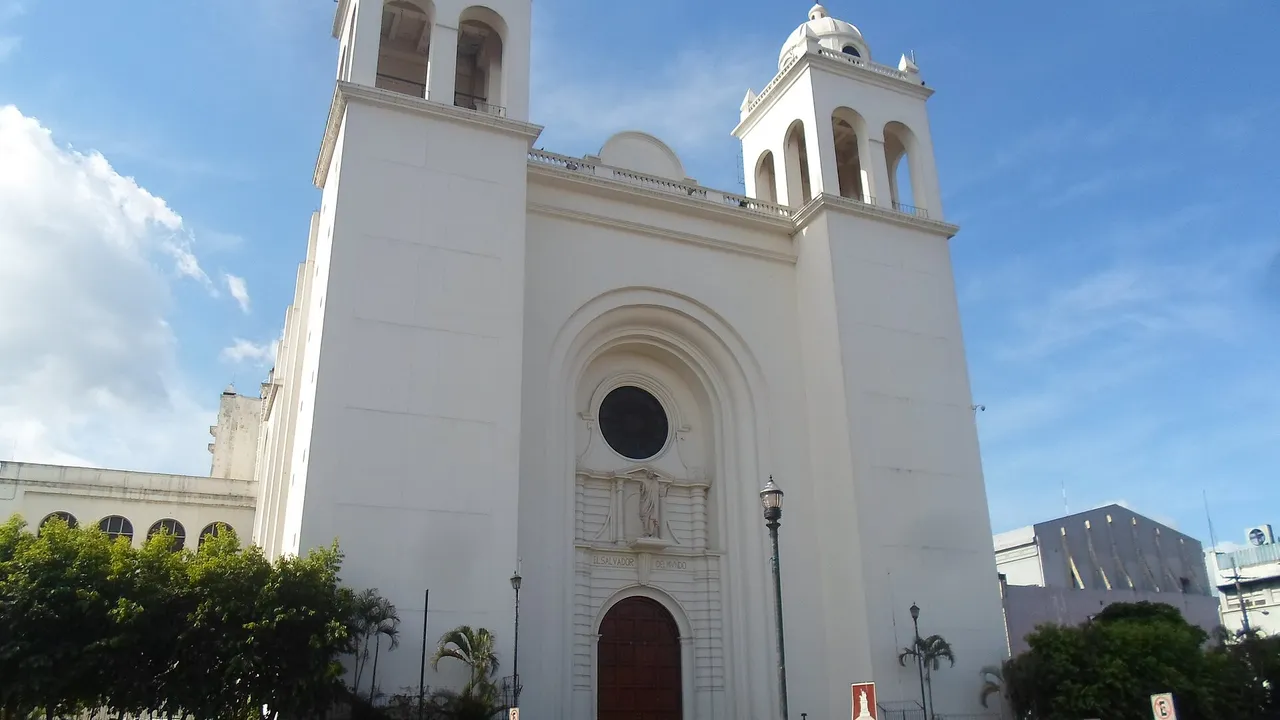
A Short History of El Salvador
Timeline
| Year | Event |
|---|---|
| About 600 | The farming village of Joya de Cerén is buried by a volcanic eruption; it is now a UNESCO World Heritage site |
| 1524 | Spanish conquest begins, led by Pedro de Alvarado |
| 1525 | San Salvador is founded |
| 1821 | Independence from Spain, 15 September |
| 1839 | El Salvador leaves the Central American Federation; San Salvador becomes the capital |
| 1800s | Coffee replaces indigo as the basis of the economy |
| 1932 | A farmworker uprising is crushed by the government of Gen. Maximiliano Hernández Martínez, and thousands are killed |
| 1969 | The «Soccer War» with Honduras |
| 1980 | Archbishop Óscar Romero is assassinated; the civil war widens |
| 1983 | The current Constitution is adopted |
| 1992 | The Chapultepec peace accords end the civil war; the FMLN becomes a political party |
| 2001 | The US dollar becomes legal tender; two destructive earthquakes strike |
| 2021 | The Bitcoin Law makes accepting bitcoin compulsory |
| 2022 | A state of exception begins on 27 March |
| 2025 | Decree 199 makes accepting bitcoin voluntary |
Source: UNESCO World Heritage Centre: Joya de Cerén Archaeological Site; Encyclopaedia Britannica: El Salvador, history; CIA World Factbook archive: El Salvador, 2025 edition; UN News: El Salvador marks 15 years since the peace accords, January 2007; Reuters: Lawmakers in El Salvador rush new bitcoin reform after IMF deal (30 January 2025); La Prensa Gráfica: the Assembly approves the 56th extension of the state of exception, 21 October 20261,2,3,4,5,6
Cuscatlán and the colonial period
The Pipil, a Nahua-speaking people, called their main settlement Cuscatlán, «land of the jewel». Spanish colonisation began in 1524 and Pedro de Alvarado founded San Salvador, «Holy Saviour», in 1525. In colonial times a few families owned the indigo and sugar estates, a pattern of land ownership that shaped the country for centuries.2,3
Independence and the coffee republic
El Salvador declared independence from Spain with the rest of Central America on 15 September 1821 and left the Central American Federation in 1839. From the 19th century coffee became the basis of the economy. In 1931 a coup brought Gen. Maximiliano Hernández Martínez to power, and in 1932 his government suppressed a farmworker revolt, executing thousands. Military-led governments followed for most of the next five decades.2,3
The civil war and the peace accords
From the late 1970s to the early 1990s a left-wing insurgency, the FMLN, fought the armed forces. Archbishop Óscar Romero was killed while saying Mass on 24 March 1980. The war cost some 75,000 lives and forced more than ten times that number to flee. The UN-mediated accords signed at Chapultepec, Mexico, on 16 January 1992 reformed the armed forces, created a civilian police force and covered justice, elections and land. The FMLN became a political party.7,8,4,9
After the war
- Dollarisation: the US dollar became legal tender on 1 January 2001.
- Earthquakes: two destructive earthquakes struck in 2001.
- Bitcoin: the 2021 Bitcoin Law made accepting bitcoin compulsory; Decree 199 of January 2025 made it voluntary.
- Security: anti-gang campaigns since the early 2020s have cut homicides sharply, but have drawn scrutiny over civil liberties and human rights.
Source: Encyclopaedia Britannica: El Salvador, history; Reuters: Lawmakers in El Salvador rush new bitcoin reform after IMF deal (30 January 2025)2,5
The state of exception
- Since 27 March 2022: the Legislative Assembly has extended the state of exception every month. The 56th extension was approved on 21 October 2026 with 57 votes.
- What it suspends: guarantees in articles 12, 13 and 24 of the Constitution, covering the right to a defence, the time limit for administrative detention and the privacy of communications.
- The government's figures: 93,334 people detained and a large fall in homicides; the Attorney General reports 10,561 people convicted.
- Concerns: human rights organisations report arbitrary detentions and more than 6,400 complaints, and count about 570 deaths in custody. The vice-president has said the measure will continue and has the support of more than 90% of Salvadorans.
Source: La Prensa Gráfica: the Assembly approves the 56th extension of the state of exception, 21 October 2026; Infobae (EFE): the state of exception is extended, with more than 93,000 arrests, 23 September 2026; Infobae (Europa Press): the vice-president says the state of exception will be lifted «when the people want», 7 November 20266,10,11
Sources
- UNESCO World Heritage Centre: Joya de Cerén Archaeological Site
- Encyclopaedia Britannica: El Salvador, history
- CIA World Factbook archive: El Salvador, 2025 edition
- UN News: El Salvador marks 15 years since the peace accords, January 2007
- Reuters: Lawmakers in El Salvador rush new bitcoin reform after IMF deal (30 January 2025)
- La Prensa Gráfica: the Assembly approves the 56th extension of the state of exception, 21 October 2026 (in Spanish)
- Encyclopaedia Britannica: El Salvador
- Vatican News: remembering Saint Óscar Romero, 40 years after his assassination
- UN Peacemaker: the Chapultepec Peace Agreement, 16 January 1992
- Infobae (EFE): the state of exception is extended, with more than 93,000 arrests, 23 September 2026 (in Spanish)
- Infobae (Europa Press): the vice-president says the state of exception will be lifted «when the people want», 7 November 2026 (in Spanish)
Facts checked 9 November 2026. Prepared by InvestSalvador.com for general information.